
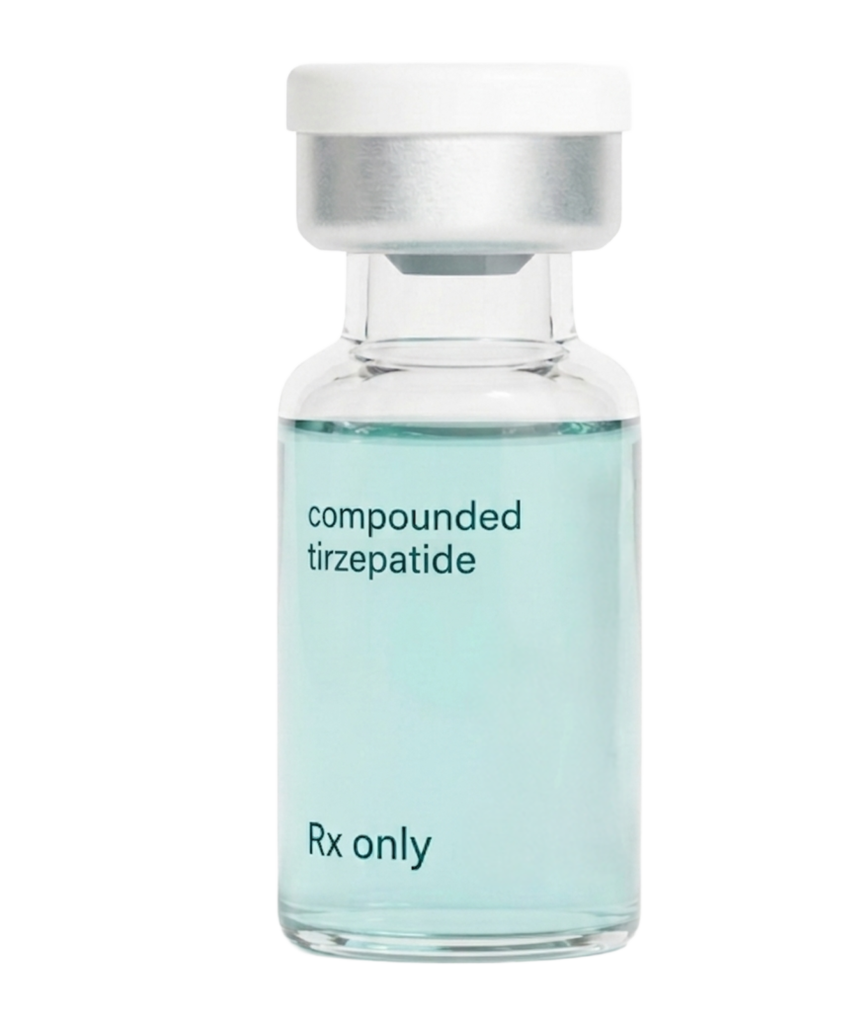
A Smarter, Simpler Way to Support Your Weight Management Goals
Clinically guided support designed to help you feel in control of your health journey.
Tirzepatide is a once-weekly prescription treatment that may help support appetite regulation, metabolic health, and sustainable weight management when combined with lifestyle changes.
- Once-weekly prescription
- Personalized treatment plan
- Provider-supervised care
- Delivered to your door
- No commitment
- Medical review required
- Results vary
What Is Tirzepatide?
Tirzepatide is a prescription medication originally developed to help manage blood sugar in adults with type 2 diabetes. Healthcare providers may also prescribe it for chronic weight management based on individual medical evaluation.
It works by activating two natural hormone pathways involved in metabolism:
- GLP-1 (appetite regulation)
- GIP (metabolic signaling)
Together, these pathways help support reduced hunger signals, improved fullness after meals, balanced blood sugar responses, and long-term weight management.
Key Pathways
How Tirzepatide Works
Tirzepatide works through several biological pathways to support weight management when combined with lifestyle changes.
Slows Digestion
You may feel satisfied longer between meals.
Reduces Hunger Signaling
Hunger may decrease and cravings may become easier to manage.
Supports Metabolic Regulation
Metabolic balance improves alongside lifestyle changes.
Once-Weekly Administration
Tirzepatide is not a stimulant and is administered once weekly under provider supervision.
Results vary between individuals and depend on lifestyle, adherence, and medical factors. Tirzepatide is not approved to diagnose, treat, cure, or prevent any disease outside of its established prescribing indications. Treatment decisions are made between you and a licensed healthcare provider.
Wellness-Focused Care. Simple Telehealth Access.
We believe healthcare should be straightforward.
Brand-name GLP-1 medications can be costly when paid out-of-pocket. Body Forward focuses on practical, provider-guided care options designed to improve access when clinically appropriate.
- Transparent pricing
- No hidden fees
- No subscriptions
- Licensed providers via telehealth
- Personalized treatment decisions
Transparent Pricing
How pricing works. We believe healthcare should be straightforward — clear pricing, no hidden fees, no long-term contracts.
Tirzepatide — Monthly Pricing:
Monthly (with Zofran)
- ✓2.5mg weekly — $300/mo
- ✓5mg weekly — $300/mo
- ✓7.5mg weekly — $300/mo
- ✓10mg weekly — $350/mo
- ✓12.5mg weekly — $350/mo
- ✓15mg weekly — $350/mo
- ✓Billed monthly (with Zofran)
- ✓Telehealth consultation included
- ✓Discreet home delivery
3-Month (with Zofran)
- ✓2.5mg weekly — $242/mo
- ✓5mg weekly — $242/mo
- ✓7.5mg weekly — $250/mo
- ✓10mg weekly — $267/mo
- ✓12.5mg weekly — $275/mo
- ✓15mg weekly — $284/mo
- ✓Billed as a 3-month supply (with Zofran)
- ✓Telehealth consultation included
- ✓Discreet home delivery
* Lower price reflects 3-month treatment plan
How Body Forward Works
Get Started in a Few Simple Steps

Step 1
Online Medical Intake

Step 2
Telehealth Provider Consultation
Consult with one of our licensed U.S. healthcare providers online. Your provider will review your intake, answer questions, and determine whether tirzepatide treatment is appropriate for you.

Step 3
Personalized Care Plan & Prescription
If approved, your provider creates a personalized care plan. Your prescription is processed, and medication is discreetly shipped directly to your door.
Important Safety Information
Important Safety Information for Tirzepatide
Prescription Use Only
Tirzepatide is a prescription medication that must be used only under supervision of a licensed healthcare provider.
Warnings & Precautions
Tell your provider if you have pancreas, kidney, or liver problems, diabetic eye disease, take insulin or other diabetes medications, have depression or mental health concerns, or are pregnant or planning pregnancy.
This medication is not insulin and should not be used for Type 1 diabetes or diabetic ketoacidosis.
Possible Side Effects
- Nausea
- Vomiting
- Diarrhea
- Constipation
- Decreased appetite
- Injection-site irritation
These effects often improve as the body adjusts.
Less Common but Serious
Pancreatitis, Severe allergic reaction, Vision changes, Low blood sugar when used with insulin or sulfonylureas
Seek medical care immediately for severe abdominal pain or allergic symptoms.
Administration & Dosage
Administered as a once-weekly subcutaneous injection, Inject into abdomen, thigh, or upper arm, Rotate injection sites, Follow provider dosing instructions exactly, Do not increase dosage without medical guidance
If a Dose Is Missed
Take within 48 hours if possible, Otherwise resume next scheduled dose
Storage
Refrigerate at 36–46°F, Do not freeze, Protect from light, Use only before beyond-use date listed on label, Keep out of reach of children and pets
Medical Disclaimer
This information is educational only and does not replace professional medical advice. Treatment decisions must be made with a licensed healthcare provider.
Who Should Avoid Treatment?
Tirzepatide is not appropriate for everyone. You should not use tirzepatide if you:
• Are pregnant, planning pregnancy, or breastfeeding
• Have a personal or family history of medullary thyroid carcinoma (MTC)
• Have Multiple Endocrine Neoplasia Syndrome Type 2 (MEN2)
• Have experienced pancreatitis
• Have severe kidney or liver disease
• Have had a serious allergic reaction to similar medications
A licensed provider will review your full medical history before prescribing.
Important Information About Compounded Tirzepatide
Some patients may be prescribed compounded tirzepatide when a licensed healthcare provider determines a customized formulation is medically appropriate.
- Compounded medications require a valid prescription.
- These formulations are prepared by licensed 503A compounding pharmacies.
- Compounded medications are not reviewed as finished drug products.
- The FDA permits compounding when individual patient needs cannot be met by commercially available medications.
Body Forward coordinates medical care but does not manufacture medications.
Frequently Asked Questions
Do I need to follow a strict diet?
No strict diet is required. Most patients benefit from balanced nutrition including lean protein, vegetables, whole grains, and healthy fats. Providers may recommend avoiding heavy, greasy, sugary, or highly processed foods if they worsen side effects.
When do people usually notice results?
Responses vary. Many patients begin noticing changes after several weeks, with progress often becoming more noticeable between weeks 8 and 12 as the body adjusts.
Is Tirzepatide only for diabetes?
No. While originally developed for type 2 diabetes, providers may prescribe tirzepatide for weight management based on individual health evaluation. Body Forward uses transparent pricing with no hidden fees, and our platform follows HIPAA privacy and security standards.
How is Tirzepatide different from GLP-1 medications?
Tirzepatide activates both GLP-1 and GIP pathways, which may support appetite regulation and metabolic function through multiple mechanisms. If you are switching from another GLP-1 program, your provider will review your current treatment and may continue therapy without restarting if medically appropriate.
Start Your Wellness-Focused Weight Loss Plan
This information is provided for educational purposes only and is not a substitute for professional medical advice, diagnosis, or treatment. Tirzepatide therapy requires evaluation by a licensed healthcare provider, who will determine whether it is appropriate based on your individual medical history. Body Forward coordinates telehealth consultations and prescription fulfillment but does not provide medical advice or manufacture medications. Results vary and are not guaranteed.